Ranch Gate Signs · buyer guide
Entrance signs versus close-view ranch plaques
For worldwide Ranch Gate Signs orders, choose an entrance sign for property recognition and a close-view plaque for details people can stop to read. An entrance sign should help the intended reader recognize the property, while a close-view ranch plaque can carry a dedication or fuller identity story.
Reviewed 2026-09-05 · AI-assisted editorial review. General buying guidance; illustrative scenarios are not customer case studies. Images are AI-generated concepts.
Start with where the reader will be and what they need to understand. A detailed plaque beside a doorway does a different job from a name viewed across an entrance. Decide which task this order serves before selecting a decorative motif. If both are needed, prepare separate layouts rather than enlarging one inscription for every location. Keep any required address, traffic or operational marking in its own reviewed system. A decorative ranch identity piece should not quietly take on obligations that its wording and placement have never been designed to satisfy.
How do you keep the entrance message focused on recognition?
Use the approved property name as the first design test for an entrance concept. Ask the owner whether a family name, ranch name or other identity should lead; they are not interchangeable simply because all appear in the correspondence. A long motto may belong on a nearby plaque instead of competing with the entrance name.
Provide photographs showing the actual approach and the proposed position, then request a scaled concept using the real wording. Avoid choosing a universal letter size from a photograph of another property. Contrast, angle, surrounding detail and the actual construction need review together. The useful outcome is a clear proposed identity arrangement for this location, with unresolved site questions visible before production.
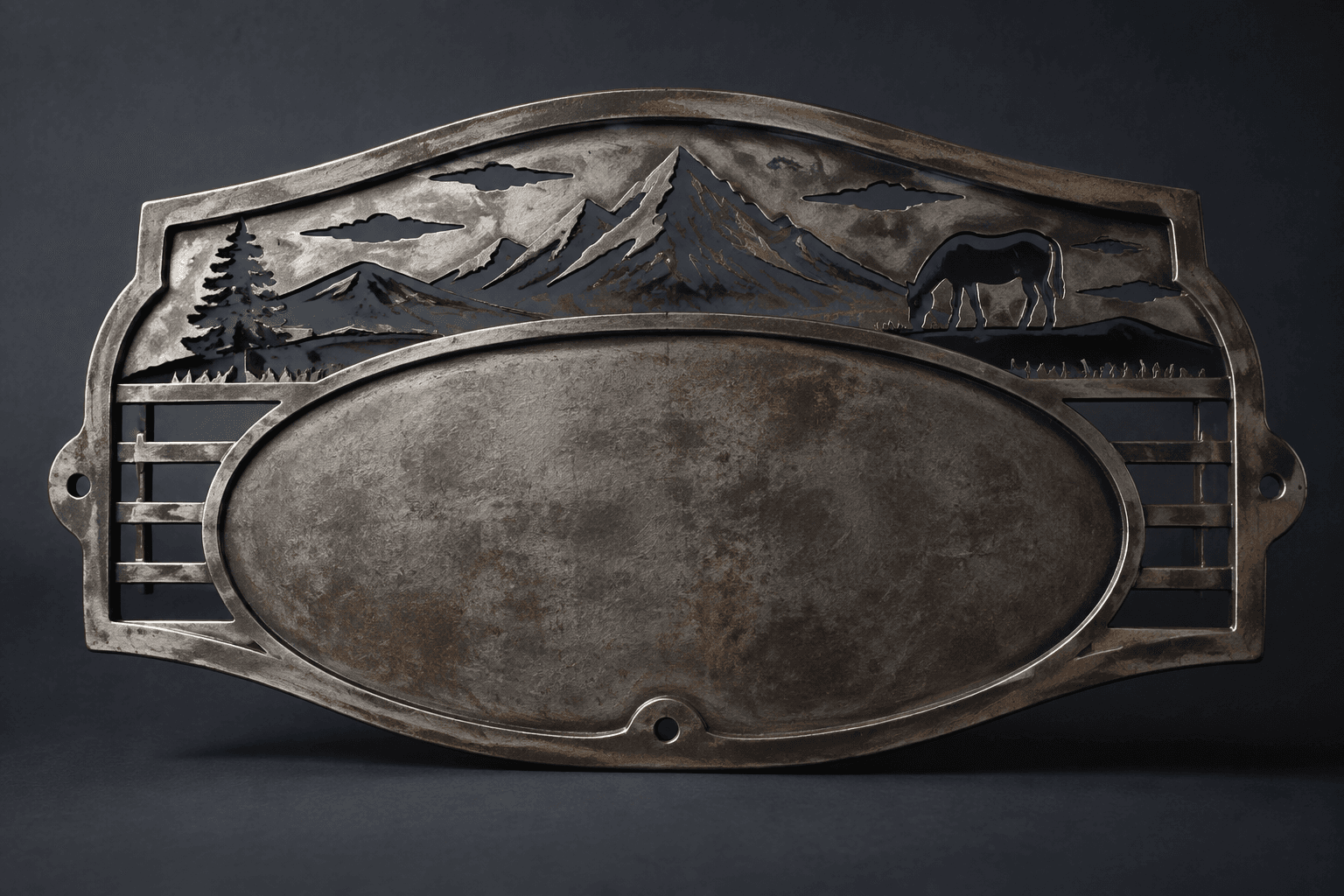
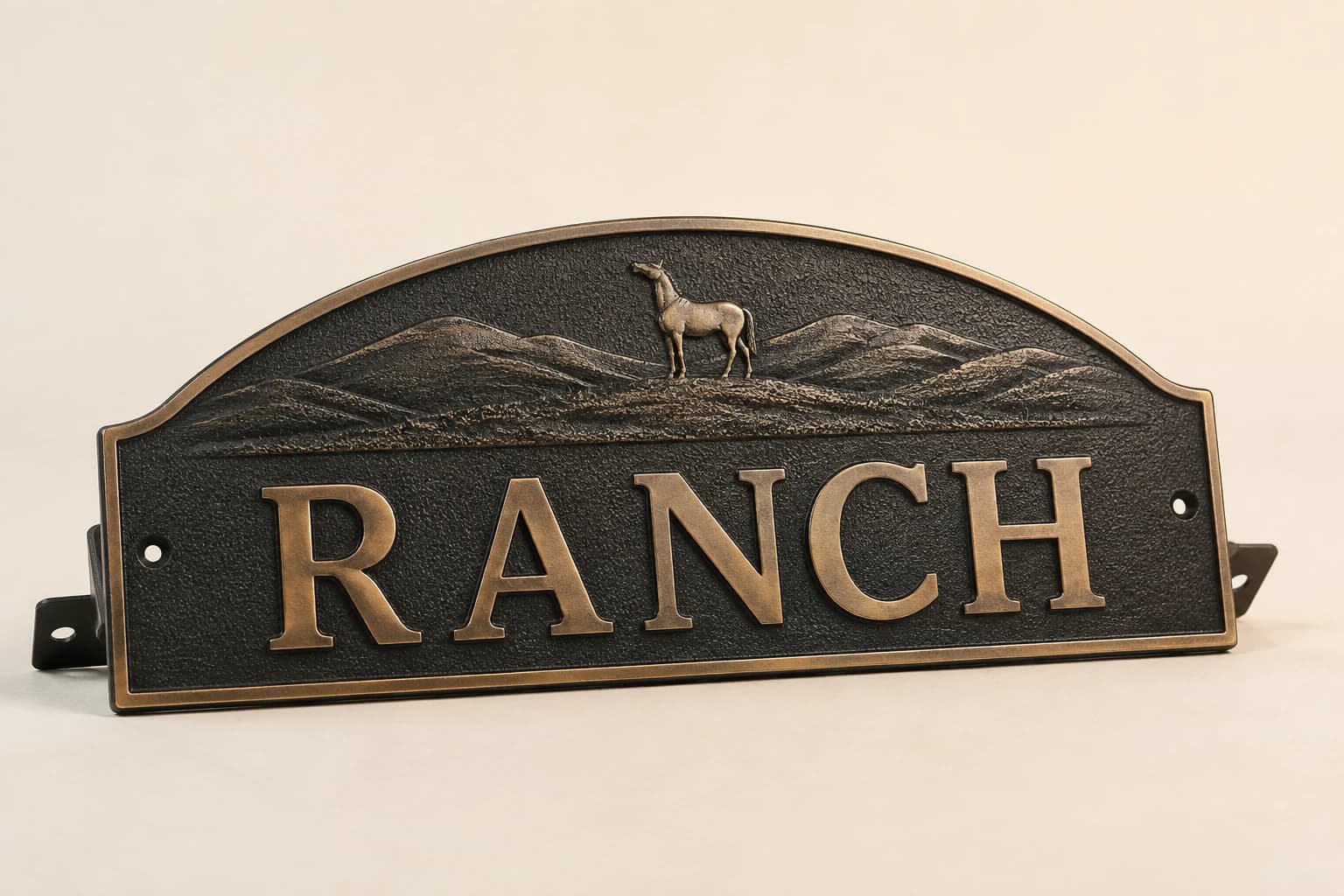
How do you use the close-view plaque for a specific story?
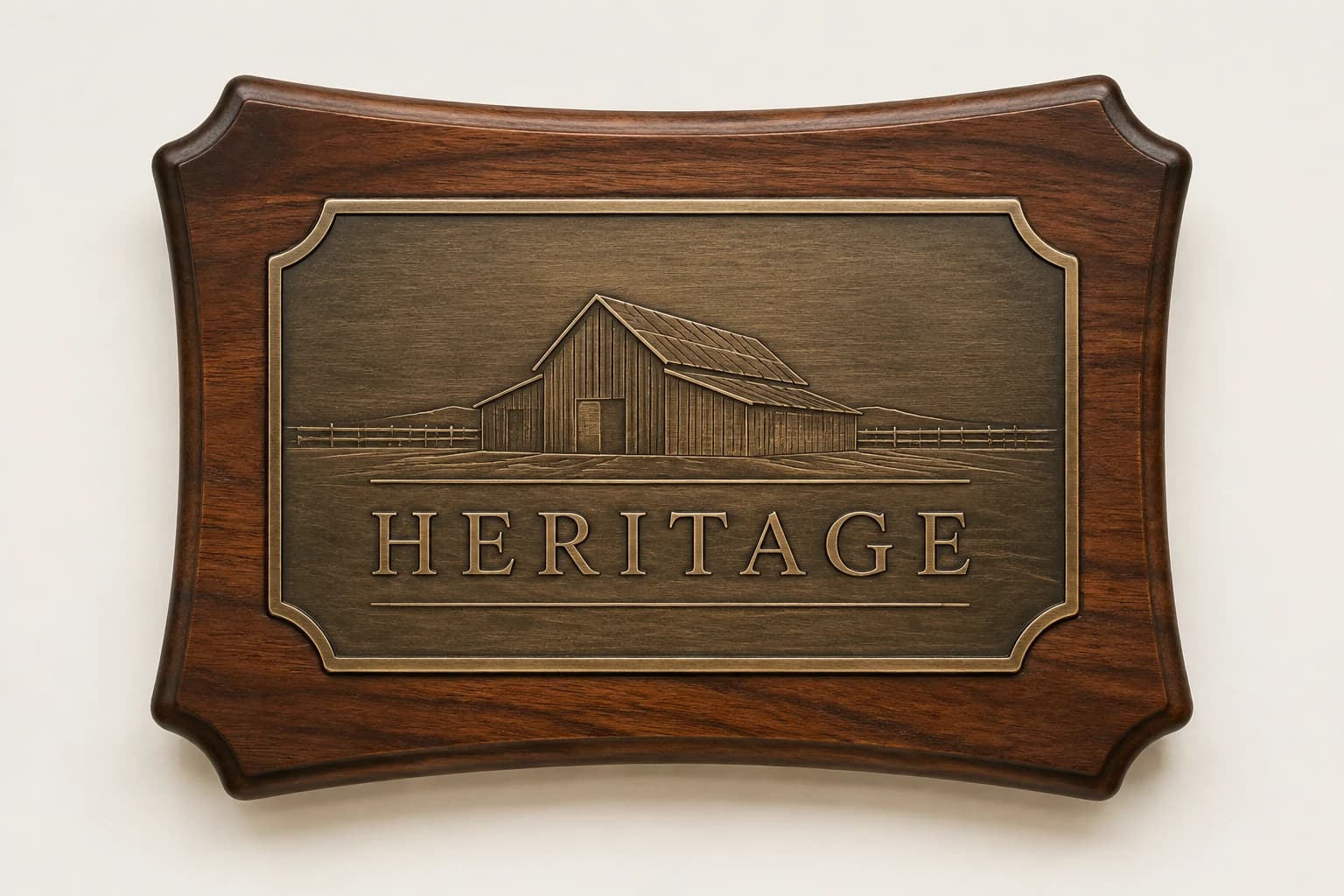
A plaque intended for someone standing nearby can include a dedication, approved date or a short explanation of a name. Give every line a purpose rather than treating the available area as an invitation to add an entire family history.
Ask which date is being commemorated and who can confirm it. A newly purchased property should not acquire an invented founding year because an old-fashioned layout has a date field. When the story is longer than the proposed object can comfortably carry, choose the portion that belongs physically at that location. A printed history or private record can preserve the remainder. The plaque should make sense to a visitor who did not attend the dedication.
How do you describe the site before choosing a mounting style?
Show whether the proposed piece relates to a wall, a gate, posts or another existing structure. These are different interfaces, even if the finished signs share a ranch silhouette. Identify what is already present, what the order is expected to supply and who will review the proposed attachment.
Do not treat hardware visible in a concept image as an included or suitable component. If the entrance has moving parts or access constraints, provide them to the responsible installer for project-specific assessment. A small close-view plaque also needs a defined location and support. Its modest size does not remove the need to explain the surface and the intended conditions in the brief.
J. Dub’s Metalworks distinguishes hanging, post and flat mounting styles.
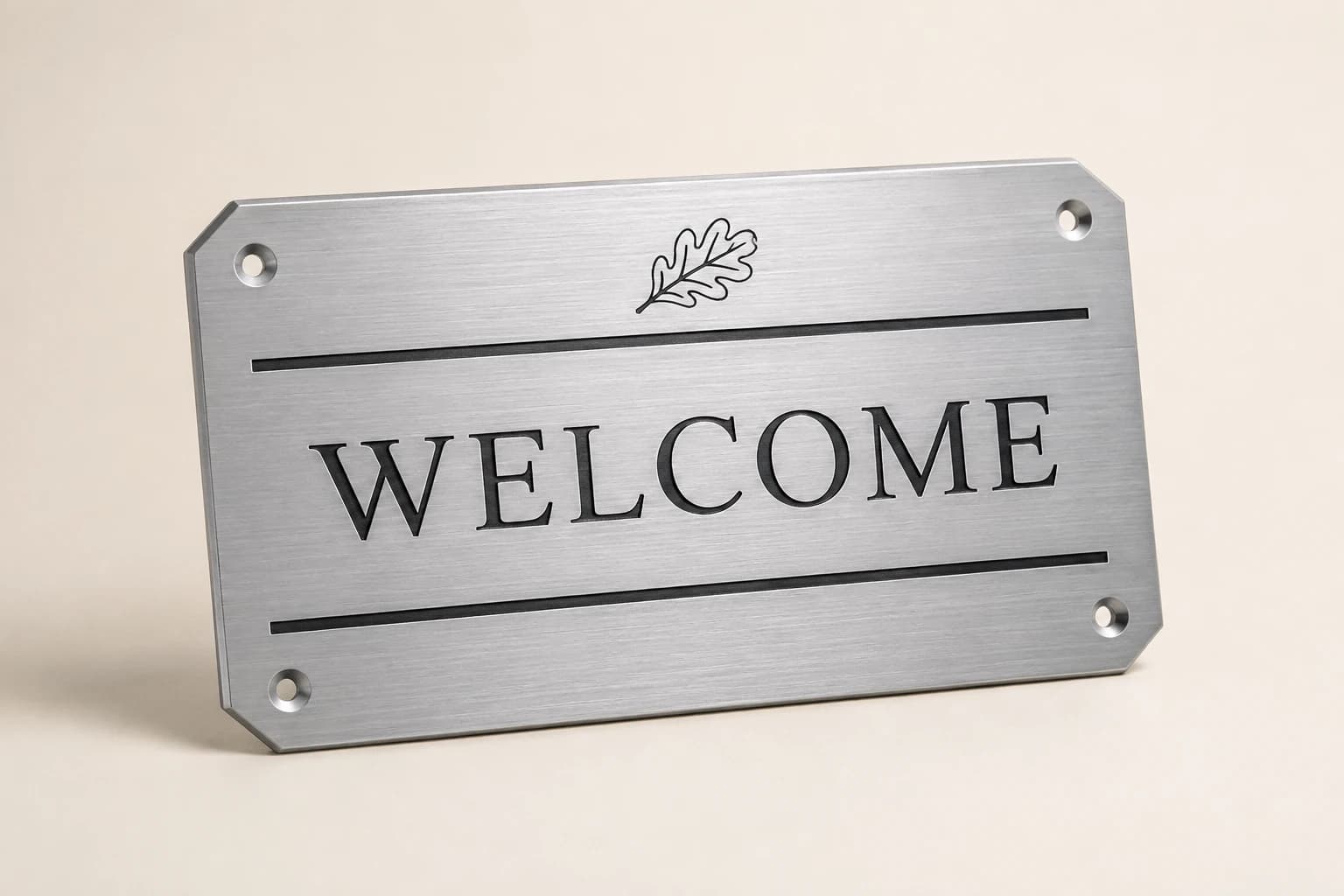
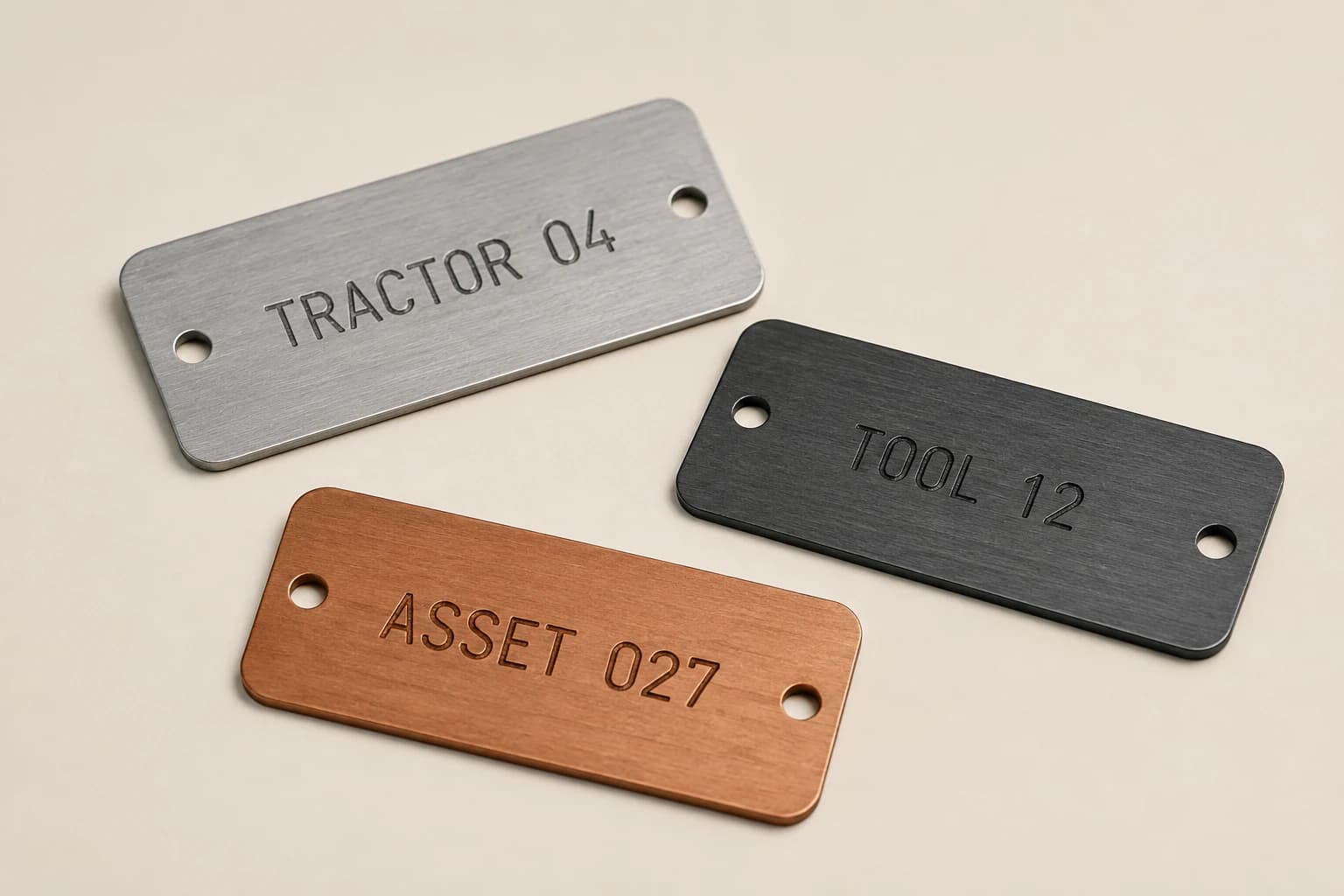
How do you compare two complete scopes in the quote?
Ask for entrance and close-view pieces as separate scope lines with dimensions, wording, artwork and proposed construction. Describe supplied supports, accessories, installation responsibility and shipping separately so the comparison has a consistent basis. Do not compare the price of a bare entrance panel with a fully packaged plaque and assume the difference represents only size.
The number of artwork versions matters too: a shared logo with different text layouts may still involve distinct proofs. No public price range or minimum for this specific Ranch Gate Signs order is established here. Request those figures against the selected quantities and design scope, and retain any optional installation or site work as an explicit proposal decision.
Count entrance and close-view pieces
Load the fictional example, then replace its inputs with the reviewed details for your project.
Method: Multiply the entered units by physical pieces per unit, then add explicitly entered additional pieces and spares. Quantities do not establish eligibility, fit or product inclusions.
Build your plan
Set spares yourself. This calculates the quantities you enter; it does not assume a recommended buffer.
Use the article’s example files
Sample rows are illustrative and are not production instructions. Replace their assumptions, keep private records separately and complete the approval fields before using the sheet for a real order.
How do you count destinations instead of duplicating every design?
List each physical piece by its intended location and reading purpose. One entrance sign does not imply one plaque for every building, and several plaques do not automatically require multiple entrance signs. A pair of approaches may call for separate artwork faces or separate objects; ask what is actually being proposed before counting them.
Keep retained existing signage outside the new purchase total. If a shared ranch motif appears on several pieces, link the artwork reference without merging the location rows. The receiving person should be able to tell which object belongs at the entrance and which carries the closer-view dedication. That distinction remains useful even when every piece has the same ranch name.
How do you review the message at its intended viewing condition?
Evaluate each proof for its own reader. For the entrance concept, review the name hierarchy and proposed location context with the owner and appropriate site reviewer. For the plaque, read the complete dedication at its proposed physical size, including the smallest line.
Do not accept one enlarged screen rendering as evidence that both uses have been addressed. If the entrance message is crowded, remove or relocate optional text through an approved revision. If the plaque sounds like a directional instruction when it is meant to commemorate a person, rewrite the message around that purpose. Keep separate approved files so a later plaque correction does not inadvertently change the entrance identity artwork.
How does the illustrative entrance signs versus close-view ranch plaques example work?
A fictional property requests one entrance name sign and three close-view plaques: one for a visitor room, one for a family dedication and one for a workshop name. These are four physical pieces with four location rows. The shared ranch motif does not make their wording or installation details identical.
The workshop plaque is decorative identification, not a replacement for any separately required notice. Enter one entrance sign at one piece, three additional close-view plaques and zero spares. One plus three equals four purchased pieces. The worksheet assigns each plaque its own purpose and location instead of using a four-copy artwork instruction. If the workshop plaque is removed from scope, reduce the additional pieces to two and revise its location row; the entrance design remains a separate approved object.
Entrance identity sign or Close-view ranch plaque: which fits this order?
Choose an entrance sign when the main job is property recognition from the approved approach. Choose a close-view plaque when readers can pause for a dedication or fuller identity message. Compare their complete location and construction scopes separately, even if a common ranch motif connects their artwork.
| Option | Entrance identity sign | Close-view ranch plaque |
|---|---|---|
| Best reason to choose it | Choose this when a reader needs to recognize the property at the approved entrance location. | Choose this when a reader can pause near a defined display to read an approved dedication or story. |
| Main review question | Does the main name remain the clear priority in the proposed approach view and actual site context? | Does every line have a verified meaning that belongs at this particular close-view location? |
| What to specify | Specify property-name text, approach references, proposed dimensions and the site reviewer responsible for the interface. | Specify the dedication, date meaning, intended reader position and complete plaque display arrangement. |
| Later change | A new dedication can revise the close-view story without changing the approved entrance name. Keep the two layouts as separate releases. | If the entrance identity changes, review which nearby plaques repeat that name and which preserve a historical dedication. |
What should you confirm before ordering?
Choose the entrance message and close-view story as separate reading jobs before requesting the final scope. Confirm the real locations, approved date meanings and supplied mounting components. The shared ranch motif can connect four different objects in the example without making them identical copies or resolving their individual site conditions.
What should an entrance-sign and plaque quote include?
For Ranch Gate Signs, request separate prices for the entrance sign and each close-view plaque, with dimensions, artwork versions, personalization, proposed accessories and shipping identified. Installation or existing-site work needs its own stated scope. A public range or design minimum is not established here; request those figures against the selected locations and complete proposed construction.
Can one layout serve both viewing situations?
Use a common motif if it helps connect the pieces, but review separate text hierarchies. An entrance sign prioritizes property recognition, while a close-view plaque can carry a dedication someone pauses to read. Enlarging a detailed plaque does not automatically produce an appropriate entrance layout for the actual site and approach.
Should a plaque include a founding date?
Include a date only when the owner approves what it means and can confirm it. A property name, family ownership date and building dedication date may describe different events. Leaving the date out is preferable to filling a traditional-looking field with an assumed year or an unsupported history claim.
Does a sign concept include its mounting arrangement?
A rendering can show a complete entrance without establishing which supports or accessories are included. Ask the proposal to list the supplied components and identify retained structures. The responsible property reviewer and appropriate installer should assess the actual interface before the decorative design becomes a production release.
How do we avoid ordering unnecessary matching plaques?
List the actual locations and reading jobs before assigning quantities. A shared ranch identity does not require a new plaque in every building. Keep existing usable pieces in the inventory and add only approved new objects. The illustrative four-piece example uses one entrance sign and three deliberately selected close-view locations.
Sources and scope
The sources below support the cited technical details. The ordering workflows are editorial recommendations. Your project specification, price and schedule are established in the written quote and approved proof.
- J. Dub’s Metalworks: Ranch Sign Guide · checked 2026-09-05
Which buying guide should you read next?
All buying guidesFor worldwide Ranch Gate Signs orders, count physical panels separately from printed or engraved faces when ordering double-sided ranch signs.
For worldwide Ranch Gate Signs orders, brief a new ranch sign around the measured existing gate and its reviewed operation before approving the decorative face.