Ranch Gate Signs · buyer guide
Double-sided ranch signs and panel counts
For worldwide Ranch Gate Signs orders, count physical panels separately from printed or engraved faces when ordering double-sided ranch signs. A double-sided sign may be one physical panel with two decorated faces, while another assembly may use two separate panels. Count the actual proposed construction rather than multiplying the word double by every location.
Reviewed 2026-09-05 · AI-assisted editorial review. General buying guidance; illustrative scenarios are not customer case studies. Images are AI-generated concepts.
Ask the supplier to identify panels, faces and supports as separate items. This distinction affects the purchase quantity, artwork schedule and receiving check. Two readable faces do not automatically mean two shipped signs. Conversely, a rendering showing one sign at a location may conceal a back-to-back panel assembly. The worksheet should preserve both the physical count and the face count so the buyer can compare proposals without assuming that different construction descriptions mean the same thing.
How do you assign a face to each intended approach?
Give the two sides clear names tied to their viewing directions, such as approach A and approach B, using the owner’s actual location labels. Do not rely only on front and back when several people see the sign from different positions.
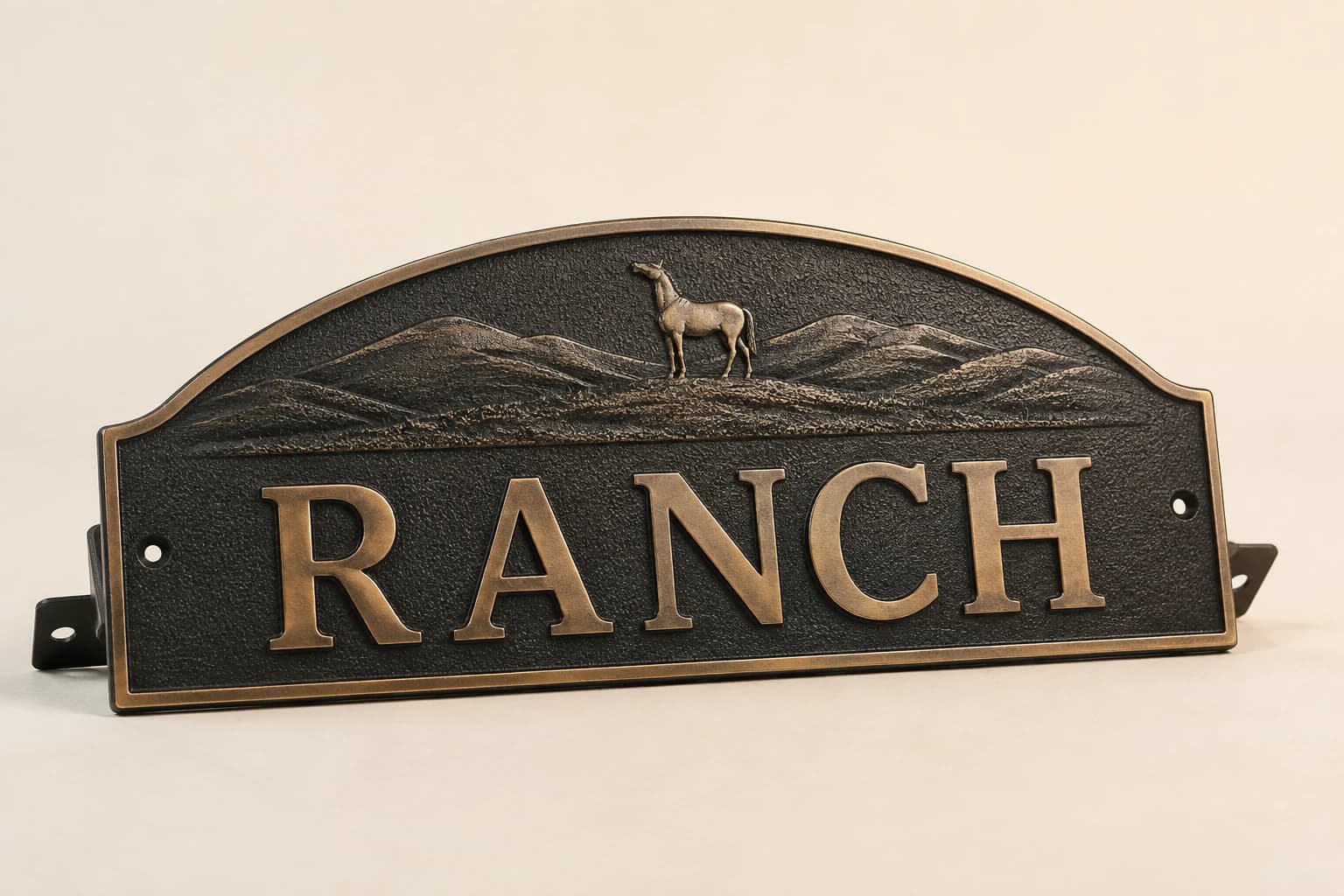
Record what each reader should see and whether the text is identical. A ranch name may repeat on both faces, while a secondary location label differs. Any arrow or directional message needs its own explicit review; mirroring the artwork can reverse its meaning. Use orientation sketches with the face schedule so the designer does not infer the second side from a photograph of the first. A duplicate face should still be deliberately approved.
How do you choose same-art or separate-art faces deliberately?
If both sides carry the same name and motif, identify them as approved copies of one artwork version. If either side differs, assign separate face references even when the change is only a subtitle. Do not copy a face after its proof has been superseded without checking the revision.
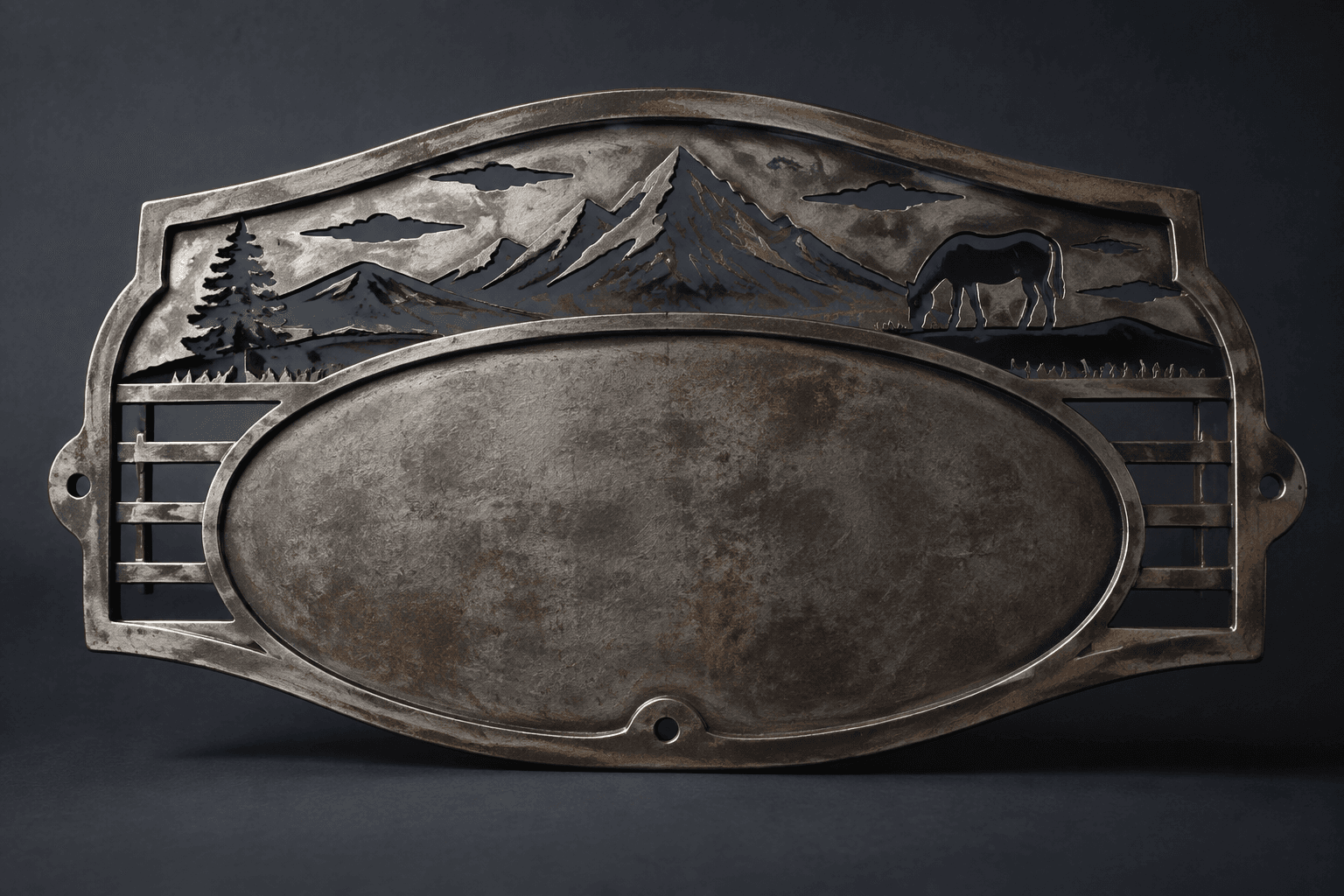
A dark silhouette that looks balanced from one approach may need layout consideration on the other, depending on the construction and surroundings. Ask for the proposed treatment rather than assuming that a two-sided option provides identical appearance under every condition. The buyer’s useful instruction is the exact approved content on each face. Production should not have to decide which side receives the destination wording or whether a reverse image was intentional.
How do you compare one-panel and two-panel assemblies fairly?
Request a drawing or component list that states whether the sign uses one panel decorated on both sides or two panels arranged back to back. Ask which supports and joining components are included in that proposal. Do not treat a face count as a materials specification or assume one approach is universally preferable.
The existing interface, desired appearance and proposed production method can affect the appropriate construction. The responsible installer should assess attachment and site questions for the actual arrangement. Keep those decisions separate from the arithmetic so an accurate count does not appear to approve the assembly. When comparing quotes, put both the number of complete locations and the number of physical panels beside the price.
Signs.com offers single- and double-sided printing for its aluminum signs.
Sources: Signs.com: Custom Aluminum Signs
How do you keep spare panels and spare faces from becoming confused?
A spare is a physical item, not an extra line in the artwork schedule. If the buyer wants a replacement panel held in storage, specify which construction and which face artwork it should carry. Do not add an unused second-side design as though it were a purchased spare.
A blank panel may be useful only if an approved later-personalization process exists for the actual product. Record that purpose before including stock in the quantity. For a small identity order, zero spares can be a deliberate choice. Retaining approved drawings and face files may be the more appropriate preparation for a future replacement, subject to a new quote and current compatibility review.
Count panels separately from decorated faces
Load the fictional example, then replace its inputs with the reviewed details for your project.
Method: Multiply the entered units by physical pieces per unit, then add explicitly entered additional pieces and spares. Quantities do not establish eligibility, fit or product inclusions.
Build your plan
Set spares yourself. This calculates the quantities you enter; it does not assume a recommended buffer.
Use the article’s example files
Sample rows are illustrative and are not production instructions. Replace their assumptions, keep private records separately and complete the approval fields before using the sheet for a real order.
How do you use the quote to expose the real counting unit?
Ask whether the quoted unit is a complete sign assembly, an individual panel or a decorated face. A low per-face figure cannot be compared directly with a complete two-sided assembly price. List artwork preparation, panel construction, supports, packing and shipping in the written scope so any optional element is visible.
This guide does not establish a Ranch Gate Signs price or design minimum for double-sided work. Request those figures against the approved panel and face schedule. If the construction changes during design, revise the quantity basis before accepting the updated proposal. The most useful comparison is the complete cost for the same locations and approved artwork, with physical components described in ordinary language.
How do you receive panels by location and both face references?
At receipt, compare the physical panel count with the packing record, then check both decorated faces against their approved references. A correct number of panels can still contain a duplicated face where a different message was required. Keep location labels with the pieces until the responsible person places them under the reviewed installation plan.
If a panel is turned around for display, confirm that the intended approach still sees the correct side. Save the face mapping with the order record, especially if several similar signs carry small wording differences. A future replacement request should identify the location, construction and both face revisions rather than simply asking for another double-sided sign.
How does the illustrative double-sided ranch signs and panel counts example work?
A fictional ranch requests three double-sided signs made as one physical panel each, plus two single-sided panels for separate close-view locations. The order contains five panels and eight decorated faces: six on the three double-sided panels and two on the single-sided panels.
The calculator totals physical panels. The face schedule remains a separate artwork check with no spare panels ordered. Enter three double-sided locations at one physical panel each, two additional single-sided panels and zero spares. Three plus two equals five panels. Separately, three times two faces plus two single faces equals eight decorated faces. If the supplier instead proposes two physical panels at each double-sided location, the construction changes and the revised piece count would be eight, not five; that alternative needs a new reviewed scope.
One panel with two decorated faces or Two panels arranged back to back: which fits this order?
Compare the physical construction before counting a double-sided sign. One panel with two decorated faces creates a different piece count from two panels arranged back to back. The useful quote identifies complete locations, physical panels, artwork faces and supports separately so the buyer can compare the same intended result.
| Option | One panel with two decorated faces | Two panels arranged back to back |
|---|---|---|
| Best reason to choose it | Choose this when the proposed construction places both approved face designs on one physical panel. | Choose this when the proposed assembly uses two separate physical panels at a location. |
| Main review question | Does the quote distinguish the one-panel quantity from the two-face artwork schedule? | Does the component list include both panels and identify how the actual assembly is reviewed? |
| What to specify | List one panel per location, both face references and the separately specified support arrangement. | List two panels per such location, each face design and any joining components included in the proposal. |
| Later change | For a replacement, retain both face references and the one-panel construction description; do not reorder by face count alone. | If the assembly changes to a different panel arrangement, revise the physical total and site proposal before reusing the artwork. |
What should you confirm before ordering?
Ask the quote to state what double-sided means in physical components and artwork faces. Confirm each approach’s content before copying or mirroring a design. The five-panel example contains eight decorated faces, so keeping those two totals separate is essential when comparing assemblies or deciding whether a spare is an actual purchased panel.
How should a double-sided ranch sign be priced?
Ask Ranch Gate Signs whether the quoted unit is a complete sign, a physical panel or a decorated face. Compare the complete scope for the same locations, including artwork versions, supports and shipping. Request the applicable range or minimum for that construction; a per-face figure alone cannot establish the total cost of a reviewed double-sided assembly.
How many pieces are in the five-panel example?
The fictional order contains three single panels decorated on both sides and two panels decorated on one side. That is five physical panels and eight decorated faces. The calculator counts the panels. If the double-sided construction changes to two panels per location, revise the physical count and quote together.
Can both sides use exactly the same artwork?
Yes, when the owner deliberately approves that arrangement for both approaches. Identify both faces in the artwork schedule and link them to the same released version. If a subtitle or directional element differs, give that face its own reference so a copied proof does not conceal an unintended message or orientation.
Should we mirror the reverse-side design?
Do not mirror it automatically. Text and directional elements need to communicate correctly to the reader on that side, while decorative artwork may require a separate design decision. Provide an orientation sketch and ask the reviewer to approve the actual second face. A reverse view is not permission to reverse the meaning.
Is a spare face an extra physical sign?
No. An additional artwork face is a design entry, while a spare panel is a physical component. If replacement stock is wanted, specify the actual panel construction and approved artwork it carries. Keep a blank-stock request separate and confirm its later-personalization process before adding it to the purchase quantity.
Sources and scope
The sources below support the cited technical details. The ordering workflows are editorial recommendations. Your project specification, price and schedule are established in the written quote and approved proof.
- Signs.com: Custom Aluminum Signs · checked 2026-09-05
Which buying guide should you read next?
All buying guidesFor worldwide Ranch Gate Signs orders, choose an entrance sign for property recognition and a close-view plaque for details people can stop to read.
For worldwide Ranch Gate Signs orders, use building and equipment identifiers that map to stable property records, with separate counts for locations and movable assets.