Ranch Gate Signs · buyer guide
Solid metal versus composite ranch entrance panels
For worldwide Ranch Gate Signs orders, compare solid metal and composite entrance panels by their actual layered construction, exposed edges and proposed artwork method. A metal-colored face can conceal a different core, and matching panel thickness does not establish equivalent behavior. Request the material identity and a project-specific installation proposal before choosing the sign’s appearance.
Reviewed 2026-09-05 · AI-assisted editorial review. General buying guidance; illustrative scenarios are not customer case studies. Images are AI-generated concepts.
Ask whether the entrance panel is solid metal, a composite with metal skins or another specifically described construction. The Custom Ranch Entrance Sign concept offers cast aluminum and outdoor-composite directions, but those terms still need an actual project specification. A metallic-looking surface can refer to color or finish rather than the entire panel. Start by naming the material throughout the object before comparing decorative details. This guide focuses on that construction decision, rather than repeating the gate-measurement or panel-counting process. The selected panel must still be reviewed against its real site and support arrangement by the responsible people. A correct substrate description is the beginning of the brief, not a complete installation approval.
How should a layered composite be understood?
Request a section description identifying the face layers and core of the proposed composite. Different products can use different constructions, so a broad composite label is not enough. Ask which exact product or specification the supplier intends to use and what information is available for the actual outdoor application.
A panel with metal faces is not necessarily solid metal through its thickness. Keep that distinction visible when discussing edges, fabrication and the proposed artwork. Do not transfer a manufacturer’s fire classification, warranty or performance statement to another product merely because both are called composite. The buyer needs the identity of the actual material and the scope of its documented use, with unresolved conditions returned for review.
Multipanel UK describes Alupanel as aluminum skins surrounding a polyethylene core.
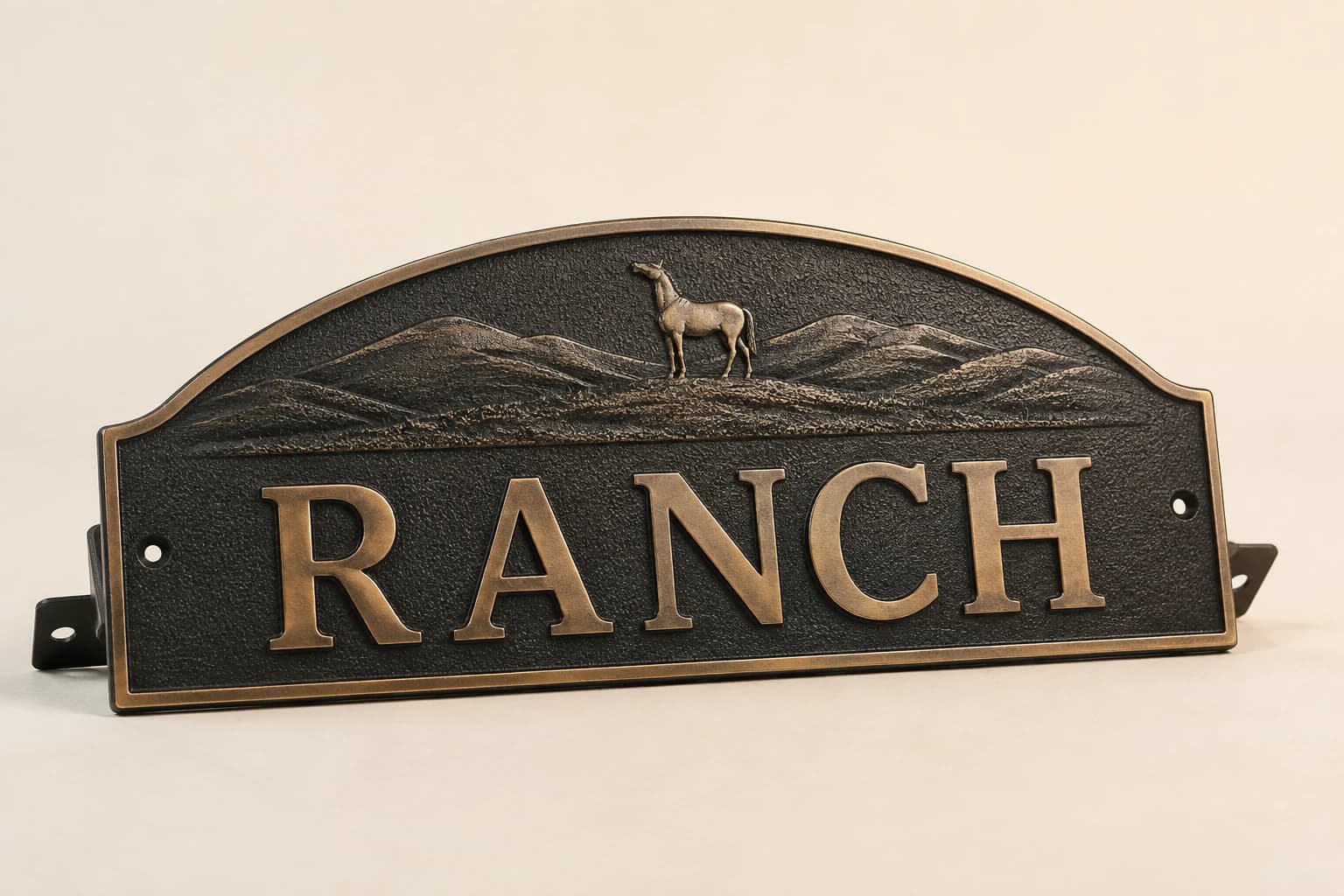

Sources: Multipanel UK: Alupanel Brochure
What should be specified at the edges and openings?
Ask how the finished panel’s edges and any proposed openings will appear in the actual construction. A front rendering can conceal a core, edge trim or fabrication detail that changes the buyer’s expected look. If the sign uses a shaped outline, the edge becomes a more visible part of the object than it may be in a rectangular mockup.
Request the supplier’s proposed treatment rather than prescribing a universal sealing or fastening method. Keep edge appearance separate from technical suitability. The owner can approve a visible detail while an installer still needs to assess the interface. A useful proof shows the complete panel, including features that disappear when only its front artwork is enlarged.
How does the artwork method affect the material comparison?
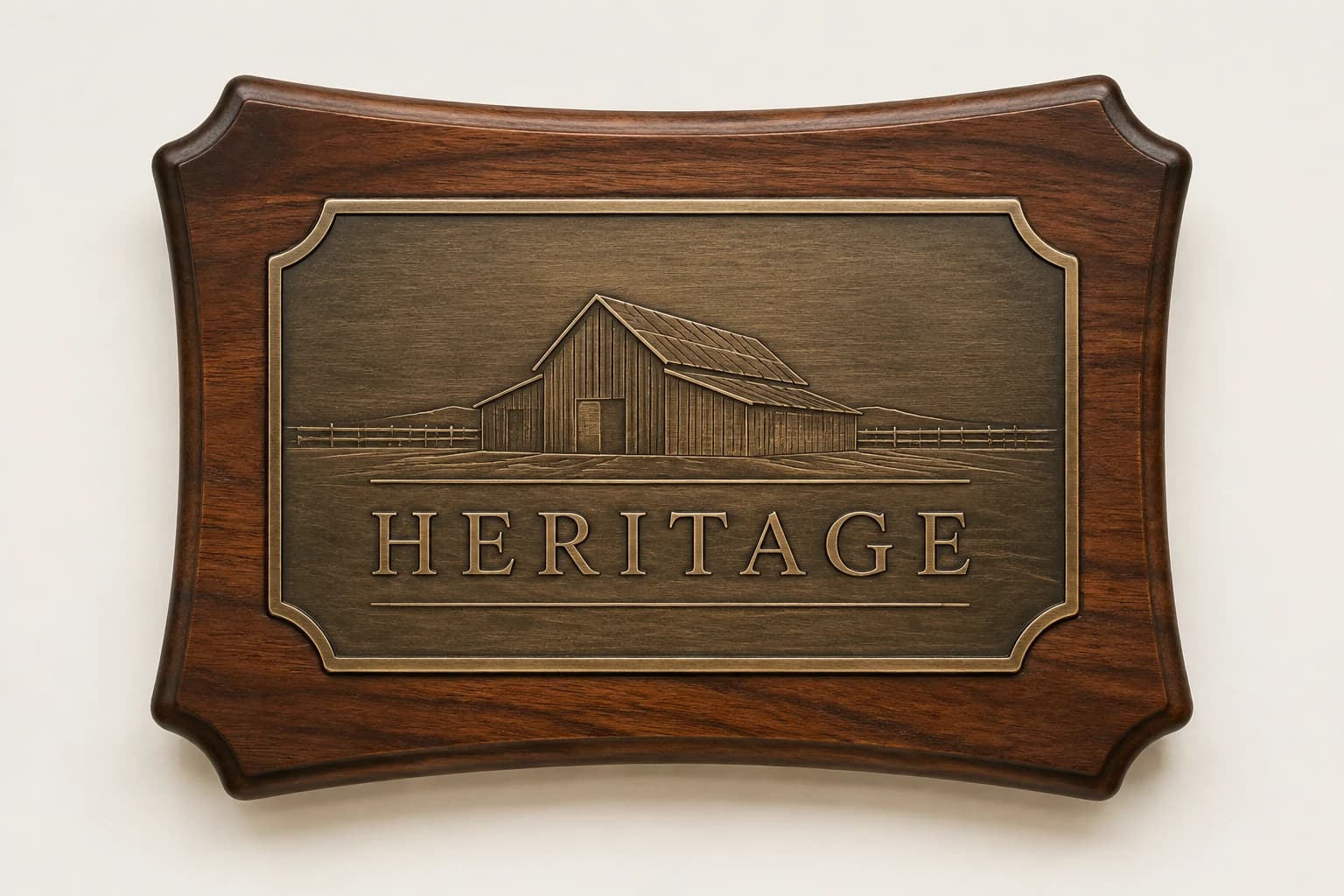
Identify whether the proposed ranch identity is cast, engraved, printed, applied or built from separate elements. A solid metal panel can carry different decoration methods, and a composite panel should not be assumed to accept every treatment merely because its face looks smooth.
Ask the supplier to describe the actual process and any production artwork changes it requires. The owner may prefer a relief identity or a flat full-color composition; those are distinct briefs. Compare the finished graphic and material together instead of selecting a substrate first and expecting the desired artwork to transfer unchanged. Keep any separately attached silhouette or lettering component visible in the quote and drawing.

Which site facts should the supplier and installer review?
Provide the identified entrance location, proposed support, expected exposure and the site information requested by the responsible installer. A material sheet alone does not determine the panel’s support or behavior in that setting. Do not infer structural equivalence from equal thickness or prescribe a universal fixing spacing from another manufacturer’s example.
The relevant reviewer should assess the actual panel dimensions, construction and installation proposal. If the owner has an existing support, preserve its measured reference in the brief. This material comparison helps define what is being considered; it does not decide access requirements, structural adequacy or the suitability of modifying an existing gate or entrance arrangement.
How should complete panel proposals be priced?
Request the exact substrate, dimensions, artwork process, edge treatment, supplied support components and shipping as stated scope. Identify any material sample, fabrication proof, installation or site work separately. No Ranch Gate Signs price range or minimum for this configuration is established here; obtain those figures against the selected construction.
Do not compare a bare composite sheet price with a finished cast identity panel and attribute the difference only to material. A fair comparison describes what the owner actually receives and what work remains. If the supplier changes the core, face material or decoration method during quoting, record the revised construction explicitly before accepting the earlier visual concept as a final specification.
Use the article’s example files
Use the worked comparison as a starting point. Replace its hypothetical dimensions and choices with the supplier’s actual proposal and the owner’s approved requirements.
What record should support a later repair or replacement?
Save the material designation, layered construction where relevant, artwork method and finished edge details with the installation reference. A later panel that matches the original color may still have a different core or fabrication method. Ask the supplier to identify substitutions and obtain the owner’s and responsible installer’s review when the change affects the proposal.
If the existing sign’s condition prompts a replacement, describe the observed issue without inventing its cause from the material category. Retain the approved visual identity separately so the owner can preserve the ranch name while evaluating a different construction. The replacement brief should make the change understandable rather than hiding it beneath a familiar product description.
How does the illustrative product-selection example work?
In a fictional panel comparison, one proposal states 3 millimeters of solid aluminum. Another states two 0.3-millimeter aluminum skins around a 2.4-millimeter core. Both total 3 millimeters in thickness, but their material structures are different. The coordinator records the full description before comparing artwork and asking the installer to assess either proposal.
For the layered example,0.3 plus 2.4 plus 0.3 equals 3.0 millimeters. Its two metal skins total 0.6 millimeters, or 20 percent of the overall thickness; the core accounts for 80 percent. These are hypothetical dimensions used to explain a section drawing, not specifications assigned to a catalog product. Equal overall thickness does not demonstrate equal weight, stiffness, fastening requirements or outdoor performance. The worksheet keeps those unknowns on hold for the actual supplier and installer. The buying decision is to request complete material identities and comparable finished scopes, rather than assume that two 3-millimeter metallic-looking panels are interchangeable.
Optional calculation: Compare the proposed material descriptions
Which proposed construction fits the intended use?
Compare solid metal, a specifically identified metal-skinned composite and other project-specified composites by construction and finished scope. Similar faces or thicknesses do not establish equivalent products. The owner should know the actual substrate, edge appearance and artwork process, while the installer reviews the selected panel against the real entrance conditions.
| Option | Solid metal panel | Metal-skinned composite | Other specified composite |
|---|---|---|---|
| Best reason to choose it | Choose this when the actual metal-through-thickness construction is part of the approved identity design. | Choose this when the specified layered panel is the proposed basis for the finished ranch sign. | Choose this only when its actual construction and proposed use are described clearly enough for comparison. |
| What the buyer must review | Review the proposed metal, decoration, edge treatment and complete installation interface. | Review face and core identity, visible edges and documented use for the actual product. | Resolve missing material or core information before transferring claims from another composite product. |
| What the quote should identify | Identify the material and finished fabrication rather than a color or thickness description alone. | Identify the exact layered construction and artwork process, including any separately supplied elements. | Identify the product specification, finishing and installation responsibilities with unresolved fields on hold. |
What should you confirm before requesting this product?
Confirm the actual panel construction before comparing its finish or price. A layered sign and a solid metal sign can share overall thickness while containing different materials. The quote should explain those differences, and the responsible installation review should use the selected product’s real dimensions and documented conditions rather than an assumed equivalence.
What affects the price of solid and composite entrance panels?
Ask Ranch Gate Signs to quote the exact substrate, fabrication, artwork, edge treatment, supplied components and shipping, including the applicable minimum or range. Installation and site work need separate scope. A bare sheet and a finished cast or decorated sign are different purchases, so compare complete proposals rather than material names alone.
Is a panel with aluminum faces solid aluminum?
Not necessarily. A metal-skinned composite can contain a different core between its faces. Ask for the exact section description and product identity. The finished face can still look metallic, but that appearance does not justify describing the whole panel as solid metal or borrowing another construction’s performance claims.
Does equal thickness make two panels interchangeable?
No. The fictional comparison shows two 3-millimeter panels with different internal structures. Thickness arithmetic alone cannot establish equal weight, stiffness, fastening behavior or suitability for the site. Give the actual material specification and proposed dimensions to the responsible installer, and keep those project-specific decisions separate from the visual artwork approval.
Should a visible composite edge be covered automatically?
Ask the supplier to propose the finished edge treatment for the actual product and design. The owner may have an appearance preference, while technical questions need the appropriate review. Do not prescribe a universal trim or sealing method from this guide, and do not let a front-only rendering conceal the edge that will be visible.
What should be checked when a replacement uses another composite?
Request the new product’s face and core identity, decoration method, edge treatment and relevant use information. Compare those with the retained original brief and obtain any required installation review. A similar color or matching overall thickness does not establish that the substitute is the same construction or can reuse every prior assumption.
Sources and scope
The sources below support the cited technical details. The ordering workflows are editorial recommendations. Your project specification, price and schedule are established in the written quote and approved proof.
- Multipanel UK: Alupanel Brochure · checked 2026-09-05
Which buying guide should you read next?
All buying guidesFor worldwide Ranch Gate Signs orders, choose an entrance sign for property recognition and a close-view plaque for details people can stop to read.
For worldwide Ranch Gate Signs orders, brief a new ranch sign around the measured existing gate and its reviewed operation before approving the decorative face.